

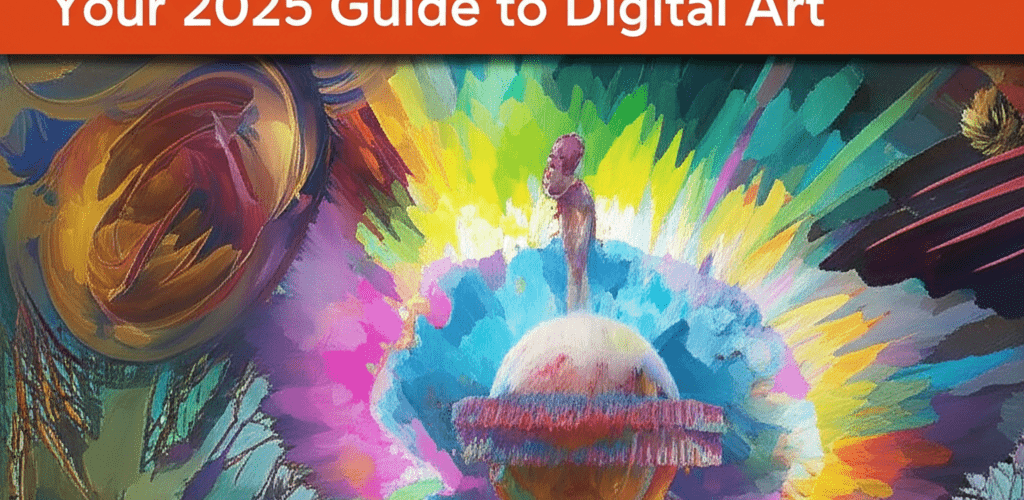
Corel Painter for Beginners: Your 2025 Guide to Digital Art
- What is Corel Painter? It’s a powerful digital art software simulating traditional media like oils and watercolors for realistic digital painting.
- Is Corel Painter hard to learn? Like any pro software, there’s a learning curve, but consistent practice and good guidance make it very accessible for beginners.
- What are the best brushes for Corel Painter beginners? Start with ‘2B Pencil’ for sketching, ‘Flat Oil’ or ‘Acrylics’ for painting, and ‘Basic Soft Airbrush’ for blending.
- Can Corel Painter be used professionally? Absolutely! Many professional artists use Corel Painter for high-quality digital illustration and concept art due to its realistic media emulation.
Ready to jump into digital art? Corel Painter can seem a bit much at first, but don’t worry! This guide is here to make learning Corel Painter for beginners straightforward and fun. We’ll walk you through everything, helping you understand its features and start creating amazing digital art today.
Corel Painter shines when it comes to mimicking traditional art with incredible realism. Getting a handle on its interface and tools is your first big step. We’ll cover all the Corel Painter basics, giving you a solid foundation for your artistic ventures. Prepare to express yourself freely in a truly dynamic digital space!
What exactly is Corel Painter and why is it great for new digital artists?
Corel Painter is a premier choice for anyone wanting to dive into realistic digital painting. It’s a robust digital art software by Corel, built specifically to replicate traditional art media—think oils, watercolors, and pastels—right on your screen. Unlike general image editors, Corel Painter puts a strong emphasis on natural-media brushes and textures, offering an authentic artistic vibe. Beginners will discover its massive brush library and customizable tools are incredibly helpful for learning digital art techniques from scratch.
This software gives artists access to thousands of brushes, paper textures, and mixing palettes, opening up endless creative paths. It’s perfect for those who want their art to feel hand-painted while still enjoying the flexibility and non-destructive benefits of digital tools. Learning Corel Painter truly lets you experiment without limits.
How can I easily get started with Corel Painter basics?
The first step with any creative software is understanding its workspace, and Corel Painter is no different. Even though it’s packed with features, its layout becomes intuitive once you get used to it. Familiarizing yourself with the interface is key to navigating efficiently and mastering Corel Painter basics.
How do I customize the Corel Painter interface for my workflow?
When you first launch Corel Painter, you’ll see your main canvas surrounded by various panels and toolbars. The left side usually has the main toolbox with essentials like brushes, erasers, and selection tools. On the right, you’ll find panels for layers, colors, and brush properties. Take a moment to explore these areas and see what’s there.
- Toolbars: These give you quick access to common commands like New, Open, Save, Undo, and Redo.
- Toolbox: This holds your primary drawing, painting, and selection tools.
- Panels/Palettes: Windows like Color, Layers, and Brush Selector offer detailed controls and information. Feel free to dock, undock, and rearrange them to fit how you like to work.
Customizing your workspace is highly recommended. Head to Window > Workspace Layout to pick from preset arrangements or set up your panels manually. This personal touch will really enhance your journey with Corel Painter, allowing you to optimize your environment for any task. You can also explore different inspiration guides for eye-catching designs to see how others set up their creative spaces.
What’s the best way to set up my first digital canvas in Corel Painter?
Before you begin to learn Corel Painter, you need a digital canvas. Creating a new document is super easy:
- Go to File > New.
- In the “New Image” dialog box, set your desired dimensions (width and height), resolution (300 dpi is common for print, 72-150 dpi for web), and color model (RGB is standard; if you plan to print, you might consider CMYK for print production, but RGB is fine for most digital work. For screen-based work, understand what RGB represents in digital displays).
- You can also pick a paper texture from the “Paper” dropdown, which can dramatically change how your digital brushstrokes look and feel. Play around with different textures to see their unique effects.
A well-prepared canvas sets the stage for any great piece of digital art. This initial setup is a crucial step in your Corel Painter tutorial process.
What are the essential Corel Painter tools every beginner should master?
Corel Painter offers a vast array of tools, but a few are absolutely critical for beginners to grasp quickly. Focusing on these core tools will speed up your progress and build your confidence in your digital art journey.
How powerful is Corel Painter’s brush selector for realistic art?
The brush selector is truly the core of Corel Painter. It holds thousands of brushes, neatly sorted by media type like oils, watercolors, pencils, and pastels. Each brush brings its own unique characteristics:
- Categories: Dive into categories like ‘Acrylics’, ‘Oils’, ‘Pencils’, ‘Watercolors’, ‘Gouache’, and ‘Airbrushes’—there are so many to explore! For those interested in traditional tools, exploring the history of pencils or different graphite pencil grades can offer a fun parallel.
- Variants: Within each category, you’ll find multiple brush variants, all with slightly different behaviors and effects.
- Brush Tracking: This cool feature lets you customize how brushes respond to your drawing pressure, giving you a truly personalized feel.
Don’t be shy—experiment! Try out different brushes to see how they interact with your canvas and colors. While there are many digital art tools out there, Corel Painter’s brush engine stands out for its incredible realism, often making it the go-to choice for artists aiming to simulate traditional media. For those curious about other software, you might wonder about the differences between Photoshop and CorelDRAW.
How do I effectively use Corel Painter’s color picker and mixing palettes?
Color is absolutely fundamental to painting. Corel Painter gives you several fantastic ways to select and mix colors:
- Color Panel: Use the color wheel or sliders to precisely pick your hue, saturation, and value.
- Mixer Panel: This is where Corel Painter truly shines! It mimics a traditional artist’s palette, allowing you to mix colors digitally just like you would with real paint. Drag colors from the color panel onto the mixer and blend them with your brush.
- Color Sets: Save your most-used color palettes for quick access across all your projects.
Mastering these color tools is a key part of any good Corel Painter guide, helping you create harmonious and vibrant artworks.
Why are layers crucial for a non-destructive workflow in Corel Painter?
Layers are vital for any digital painting software, giving you non-destructive editing power and tons of flexibility. Think of layers as transparent sheets stacked on top of each other. You can paint on one layer without impacting anything on another. This is a core concept in digital graphic design, similar to how different file formats are handled in graphic design.
- Creating Layers: Just click the ‘New Layer’ icon in the Layers panel.
- Visibility: Toggle layer visibility on or off to see different stages of your work, or to experiment with various elements.
- Blending Modes: Change how layers interact with each other using modes like ‘Multiply’ for shadows, ‘Screen’ for highlights, or ‘Overlay’ for enhanced contrast.
- Opacity: Adjust how transparent a layer is.
Working with layers is central to digital art. If you’re familiar with other raster graphics software, you’ll find Corel Painter’s layer system intuitive, yet uniquely tailored for painting workflows compared to programs like Photoshop. Considering system requirements, understanding if 8GB RAM is enough for graphic design or if 16GB RAM is ideal can also be helpful for a smooth workflow.
How do I take my first steps with a Corel Painter tutorial?
Now that you’re familiar with the basic interface and essential tools, let’s get creative! This simple Corel Painter tutorial will help solidify your understanding and get you comfortable with the actual painting process.
How do I start basic sketching and line work in Corel Painter?
Begin by choosing a pencil or charcoal brush from the ‘Pencils’ category. Reduce the brush size for finer lines. Start sketching light forms on a new layer. Don’t stress about perfection; just focus on getting comfortable with your stylus and tablet. Corel Painter’s responsiveness makes sketching feel incredibly natural. For more detailed pencil techniques, you might want to look into charcoal pencil techniques or the debate between mechanical vs. traditional pencils.
Practice drawing simple shapes—circles, squares, and triangles—to build your hand-eye coordination with digital tools. This foundational exercise is excellent for anyone looking to learn Corel Painter effectively.
What’s the best way to apply colors and build tones in Corel Painter?
Once your sketch is ready, create a new layer underneath your sketch layer. Select a painting brush, like an ‘Oils’ or ‘Acrylics’ variant. Pick a base color from the Color or Mixer panel. Start laying down broad strokes of color, gradually building up tones. Remember, Corel Painter’s brushes can mix colors directly on the canvas, just like real paint.
Experiment with different brush sizes and opacity settings. Use lighter pressure for softer strokes and heavier pressure for more opaque coverage. This iterative process of layering color is a fundamental skill in digital painting.
How can I use different Corel Painter brushes for texture and detail?
After you’ve established your base colors, make another new layer specifically for adding texture and details. This is where Corel Painter truly shines! Explore brushes from categories like ‘Pastels’, ‘Watercolors’, or even ‘Sponges’ to add interesting textures. For those finer details, switch to smaller, more precise brushes.
The magic of Corel Painter is its ability to simulate the subtle characteristics of physical art tools. Don’t hesitate to try various brushes to see how they contribute to the overall feel and finish of your artwork. This hands-on exploration is the best way to develop your skills as a Corel Painter for beginners artist.
How can Corel Painter help me master essential digital design principles?
Beyond simply learning the tools, understanding fundamental design principles is crucial for creating artwork that truly stands out. Corel Painter offers the perfect digital environment to practice and refine these concepts.
How can I use Corel Painter to improve my artwork’s composition?
Composition is all about how you arrange elements within your artwork. For a strong composition, think about:
- Rule of Thirds: Imagine dividing your canvas into nine equal sections and placing key elements along these lines or at their intersections for visual interest.
- Leading Lines: Use lines within your painting to naturally guide the viewer’s eye through the piece.
- Balance: Make sure your artwork doesn’t feel lopsided; achieve balance either symmetrically or asymmetrically.
Practicing these principles with Corel Painter means you can easily adjust and refine your layouts without having to start over. This is a core element in any effective Corel Painter design strategy, allowing you to cultivate your graphic design skills.
How do I apply color theory basics within Corel Painter?
Understanding color theory helps you create pieces that are both harmonious and emotionally impactful. Experiment with:
- Complementary Colors: Colors directly opposite each other on the color wheel (like red and green) create high contrast and vibrancy.
- Analogous Colors: Colors next to each other on the color wheel (such as blue, blue-green, and green) create a sense of harmony and calmness.
- Color Temperature: Use warm colors (reds, yellows) and cool colors (blues, greens) to create depth, mood, and visual interest.
The Mixer panel in Corel Painter is a fantastic tool for actively applying color theory, letting you see how colors blend and interact in real-time. This interactive experience significantly boosts your journey to learn Corel Painter with a focus on artistic principles.
What advanced techniques can elevate my Corel Painter art?
Once you’re comfortable with the Corel Painter basics, you can start exploring some more advanced techniques that will truly elevate your digital art. These methods are often highlighted in a comprehensive Corel Painter guide.
How do I create and use custom brushes in Corel Painter?
Corel Painter lets you modify existing brushes and even create your very own. This offers an unparalleled level of customization. Experiment with the ‘Brush Creator’ panel (find it under Window > Brush Control Panels > Brush Creator) to tweak parameters like size, opacity, texture, and flow. Saving your custom brushes can dramatically speed up your workflow and personalize your artistic style.
How can I use reference images in Corel Painter for better accuracy?
Reference images are invaluable for learning and achieving accuracy in your artwork. Corel Painter’s ‘Reference Image’ panel (Window > Reference Image) allows you to load an image and keep it on your canvas for easy viewing without cluttering your main workspace. You can also use the ‘Trace’ feature (Window > Tracing Paper) to lightly overlay a reference image, which is super helpful for nailing proportions and shapes as you paint.
What are layer blending modes and how do they create effects in Corel Painter?
As we talked about earlier, layers are incredibly powerful. Blending modes control how the pixels of one layer interact with the pixels of the layers beneath it. Play around with modes like ‘Multiply’ for adding rich shadows, ‘Screen’ for brilliant highlights, ‘Overlay’ for enhanced contrast and vibrancy, or ‘Colorize’ for tinting. Each mode offers unique visual effects that can completely transform your artwork and add depth.
For a deeper dive into these and other powerful features, definitely check out our collection of Corel Painter tips and tricks designed to help you push your artistic boundaries.
Common Questions about Corel Painter for Beginners (FAQs)
As you get deeper into Corel Painter, you’ll naturally have questions. Here are some common queries from aspiring digital artists, answered simply:
- What are the best brushes for Corel Painter beginners?
For beginners, it’s smart to start with basic brushes that mimic traditional media. Great starting points include the ‘2B Pencil’ from the Pencils category for sketching, ‘Flat Oil’ or ‘Acrylics’ for painting, and ‘Basic Soft Airbrush’ for blending. Don’t forget the ‘Blender’ brushes for smooth transitions!
- Is Corel Painter difficult to learn?
Like any professional software, Corel Painter has a learning curve. But with a solid Corel Painter for beginners guide and consistent practice, it becomes very accessible. Its interface is designed to feel like a traditional art studio, which can be quite intuitive for artists moving from physical media to digital.
- Can I use Corel Painter for professional work?
Absolutely! Corel Painter is a favorite among professional artists, illustrators, concept artists, and animators for creating high-quality, expressive digital art. Its unique ability to produce authentic-looking traditional media results makes it a top choice across various creative industries.
- What’s the difference between Corel Painter and other art software?
The main difference is Corel Painter’s intense focus on realistic traditional media emulation. While programs like Photoshop are versatile image editors with painting tools, Corel Painter is built from the ground up to offer an unmatched natural media experience, especially with its advanced brush engine and mixer palette.
Ready to explore more topics or dive deeper? We have other guides and tutorials to help you enhance your Corel Painter skills and grow as an artist!